

Some science fiction feels quiet and thoughtful. Then there is space opera, the kind that throws open the hangar doors and says, “Right, let’s cross half the galaxy and start trouble.” It has empires, rebellions, ancient technology, alien cultures, war fleets, messy politics, and characters who are usually one bad decision away from changing history.
That is why space opera books still have such a loyal crowd. Readers do not come to them only for lasers and spaceships. They come for scale. They want stories where one choice can shake a planet, one betrayal can start a war, and one strange discovery can rewrite everything people thought they knew.
Many popular reading lists still place titles like Dune, Hyperion, Foundation, and Leviathan Wakes among the strongest names in the genre, which says a lot about how much readers still enjoy big, ambitious science fiction.
Space opera works because it gives readers room to breathe. A mystery can happen on one planet, a battle can break out near another, and somewhere else, a political deal can quietly ruin everyone’s plans. The genre can hold romance, war, philosophy, survival, diplomacy, and weird alien biology without feeling too crowded.
It also suits readers who enjoy galactic empire novels and stories where power is never simple. Kings, emperors, corporations, religious orders, military commanders, rebels, spies, and scientists all want control. Nobody gets the whole board, and that is half the fun.
A good space opera does not need to explain every starship engine in painful detail. It needs stakes, momentum, and characters worth following. The science matters, yes, but the drama carries the book.
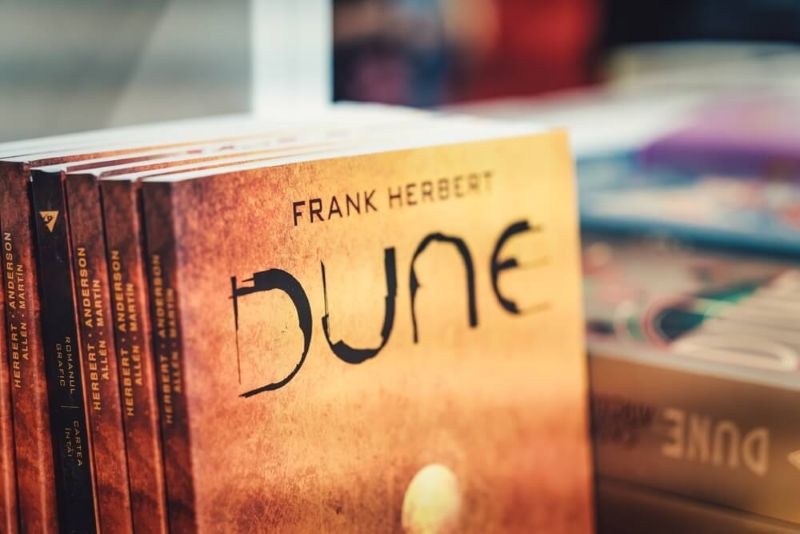
When you talk about epic sci-fi, Dune is usually the first thing that comes to mind, and for good reason. Desert politics, noble houses, religious prophecy, ecological tension, betrayal and one of the most memorable planets in the genre.
The film follows Paul Atreides as his family takes over Arrakis, a brutal desert world that is the only source of the most valuable substance in the universe. A political move that turns into something much bigger and much weirder.
Dune is ideal for readers who enjoy slow-building tension and layered worldbuilding. This is not a fast space battle book. It is more rich than that. The play of power, the family loyalties, the spiritual questions, it lends a serious weight to it that still feels fresh.
Foundation is a classic choice for readers who enjoy large historical patterns more than one single hero saving the day. It follows the idea of psychohistory, a mathematical way of predicting the future behavior of huge populations.
The Galactic Empire is falling, and Hari Seldon wants to shorten the coming dark age. That setup alone makes the book one of the most important galactic empire novels in science fiction. It is big, clever, and more interested in civilization than action scenes.
Foundation suits readers who enjoy strategy, social collapse, politics, and time-spanning consequences. It may feel less emotional than modern sci-fi, but its ideas still hit hard.
Hyperion feels like several stories folded into one strange and beautiful journey. A group of travelers heads toward the mysterious Time Tombs on the planet Hyperion, each carrying a personal story that slowly reveals the wider universe.
The book has religion, artificial intelligence, poetry, horror, war, and one of the most haunting figures in sci-fi, the Shrike. It is not always easy, but it is deeply rewarding.
Leviathan Wakes is the first book in The Expanse series, and a pretty great intro to space opera that’s gritty and lived-in. It starts with missing people, political tension, and a discovery that could change humanity forever.
The solar system feels practical and coarse. Earth, Mars and the Belt all have their needs, their grudges, their fears. This makes the conflict feel real.
This is also a good choice for anyone who likes military science fiction but wants more than battlefield scenes. There are ships, weapons, strategy, and danger, but there is also detective work, class tension, and human stubbornness.
A Fire Upon The Deep is the kind of book that reminds readers how strange science fiction can be. It has ancient dangers, galaxy-level stakes, and alien species that do not feel like humans in costumes.
One of its best-known ideas is the Zones of Thought, where intelligence and technology work differently depending on the region of space. That single concept gives the story a wild, unpredictable scope.
It’s a wise selection for those readers who want big ideas with their adventure. It feels unusual, ambitious, and a little mind-bending, in the best possible way.
Also Read: Best Body Horror Books and Body Horror Novels to Read
A Memory Called Empire brings politics, language, identity, and empire into a sharp, elegant story. It follows Mahit Dzmare, an ambassador from a small space station who arrives at the vast Teixcalaanli Empire after her predecessor dies under suspicious circumstances.
This one is less about constant battles and more about cultural pressure. What happens when a smaller society admires an empire that may eventually swallow it? That question sits at the heart of the book.
Readers who enjoy diplomacy, court intrigue, memory technology, and complicated loyalty will find a lot to like here. It is refined, tense, and beautifully controlled.
Ancillary Justice begins with revenge, but it quickly becomes something more unusual. The main character was once part of a massive starship intelligence and now exists in a single human body. That idea alone gives the story a unique voice.
The book explores empire, identity, language, and power without feeling dry. It also offers the kind of scale expected from space opera books, but through a very personal lens.
Readers who want sci-fi series recommendations with fresh narration and smart worldbuilding should not skip this one. It feels different from older space opera while still honoring the genre’s love of empires, ships, and impossible choices.
Old Man’s War has a simple hook. Elderly people leave Earth, join the Colonial Defense Forces, and receive upgraded bodies built for combat. From there, the story becomes fast, sharp, funny, and surprisingly emotional.
This is a strong match for readers who enjoy military science fiction with personality. It has combat, alien encounters, dark humor, and a main character who feels easy to follow.
The book moves quickly, which makes it beginner-friendly. It does not bury readers under heavy terminology. It gets them into the action and keeps things moving.
Consider Phlebas opens the Culture series, one of the most respected names in modern space opera. The Culture itself is a powerful, advanced civilization run with the help of artificial intelligences, but this book follows someone fighting against it.
That makes the perspective interesting. Instead of introducing the Culture from the inside, the story shows how others fear, resist, or misunderstand it.
It is a strong choice for readers who like interstellar war fiction with moral gray areas. The action can be wild, but the bigger question is about civilization, freedom, and whether a “better” society has the right to interfere.
Some readers start with The Player of Games instead, and that is fair. Still, Consider Phlebas gives a rough, energetic first look at the scale of Banks’s universe.
Choosing the right book depends on the mood. A reader who wants politics can start with Dune, Foundation, or A Memory Called Empire. Someone craving action may enjoy Leviathan Wakes, Old Man’s War, or Consider Phlebas. For stranger, more ambitious adventures, Hyperion and A Fire Upon The Deep are excellent picks.
For fans of futuristic adventure books, the best choice is often the one that sounds slightly too big. That is part of the appeal. Space opera should feel a little oversized.
Readers looking for interstellar war fiction may prefer Old Man’s War, Leviathan Wakes, or Consider Phlebas. Those who want thoughtful sci-fi series recommendations can move from Ancillary Justice into the Imperial Radch trilogy, from Leviathan Wakes into The Expanse, or from Foundation into Asimov’s wider universe.
You May Also Like: Dark Academia Books and Themes: Top Picks Readers Love
Space opera is not going away because readers still want stories with reach. They want the old thrill of starships, empires, alien worlds, secret histories, and impossible odds. They also want characters who feel human even when the story is happening across moons, stations, and distant suns.
The best space opera books make the galaxy feel huge without losing the people inside it. That balance is what keeps the genre alive. Whether someone starts with Dune, Hyperion, Leviathan Wakes, or Ancillary Justice, there is a whole universe waiting on the next page.
Yes, space opera can be a great starting point, because the stories tend to be more about adventure, conflict, and character drama than about technical science. If you’re new to the genre, you might try Leviathan Wakes, Old Man’s War, or A Memory Called Empire. They have good characters and straightforward plots. More complicated classics such as Dune or Foundation can be saved for when the reader wants more in-depth worldbuilding.
Space opera usually focuses on large-scale adventure, political conflict, empires, wars, and emotional stakes across space. Hard science fiction gives more attention to scientific accuracy, technology, physics, and realistic problem-solving. Some books blend both styles, but space opera is generally more dramatic and sweeping, while hard sci-fi is often more technical and idea-driven.
Most space opera series are better when read in order because the world, politics, and character relationships build over time. However, some series are more flexible than others. The Culture novels, for example, are often read out of order because each book tells a mostly separate story. For The Expanse, Foundation, or Imperial Radch, starting with book one is usually smarter.
This content was created by AI